Sjir Hoeijmakers presents his paper ‘Municipal Basic Income-related Experiments in the Netherlands’ at the Social Policy Conference 2016.
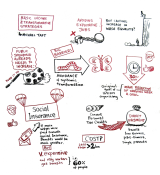
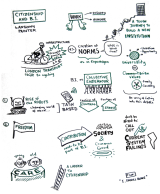
Basic Income provides the key to resolving major challenges that changes to welfare and work have brought in the twenty first century. It has the potential to reduce bureaucracy dramatically and increase respect for care work while promoting entrepreneurship and engagement with education, among other things.
There will be nearly 1 million people aged 65 and over by 2031 – an increase of 86.4 per cent. Of these 136,000 will be aged 85 or over by 2031, an increase of 132.8 per cent. Now is the time to plan Ireland’s investment in services and infrastructure. This is one of the key issues highlighted in the National Social Monitor 2016.
The National Social Monitor is Social Justice Ireland’s annual contribution to the public debate that is needed on Ireland’s future and how Ireland is performing in terms of promoting the
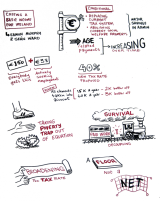
Without the social welfare system almost 50 per cent of the Irish population would have been living in poverty in 2014. Adequate social welfare payments are required to prevent an increase in poverty. Between 2010 and early 2016 inflation was 3.44 per cent - implying that a buying power of €188 in 2010 was equivalent to €194.50 by February 2016.
The 2016 Living Wage rate remains €11.50 per hour. This is the average gross salary required by a single individual (without dependents) in full-time employment to afford a socially acceptable minimum standard of living across Ireland.
Since the onset of the recession the number of people in poverty in Ireland has increased by more than 100,000. Today there are more than 750,000 people living in poverty in Ireland; this is a major concern. More than 57 per cent of those in poverty are not connected to the labour market; they are people who are retired, students, people in caring roles or people who are ill or people with a disability.
Social Justice Ireland's policy briefing on poverty, deprivation and inequality.
A brief snapshot on how Ireland is performing in terms of income distribution and some policy proposals.
Social Justice Ireland today (April 4, 2016) presents its latest EU-wide study to the EU's Economic and Social Committee (EESC) in Brussels. Entitled 'Europe: A Union for the Powerless as well as the Powerful' it analyses what has been happening in all 28 EU countries on issues such as poverty, unemployment, services and taxation.