Large multinationals are paying significantly lower tax rates than they were before the financial crisis. Companies’ effective tax rates have fallen 9 per cent over the last decade, despite some efforts by politicians to tackle aggressive tax avoidance.
Social Justice Ireland recommends a Minimum Effective Rate of 6 per cent. This would only affect companies who are currently availing of effective rates lower than that on a regular basis; something that is quite unacceptable.
As part of Social Justice Ireland's recent submission to the Low Pay Commission, we advocated for the introduction of Refundable Tax Credits as a means to tackle the issue of Low Pay in the Irish economy.
While the economy is doing well, it is crucial that policy-makers realise that many on lower incomes are not benefiting as they should. Almost 800,000 people in Ireland are living in poverty, a quarter of a million of whom are children. 1 million people in Ireland are experiencing deprivation. 105,000 people are working in a job with income so low they are living in poverty. Social Justice Ireland has a plan to fix this, and to build a fairer society for all.
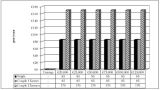
Some tax proposals currently being considered by Government should be rejected because they would give far greater benefit to people earning higher incomes than to lower income employees according to a new study conducted by Social Justice Ireland.
Budget 2018 is just around the corner. What kind of changes to Ireland's taxation system are coming. Social Justice Ireland analyse some of the options available.
The National Social Monitor is Social Justice Ireland’s annual contribution to the public debate that is needed on Ireland’s future and how Ireland is performing in terms of promoting the wellbeing of all in society. It examines progress in areas such as housing, healthcare, education, employment, rural development and the environment among others.
Ireland’s social contract is broken. The legitimate expectations of citizens are not being met. This is most obvious in areas such as housing and homelessness, a two-tier healthcare system, an ongoing failure to provide rural broadband and high levels of poverty and social exclusion, especially among children. 2017 is the first year of a new century for Ireland and now is the perfect opportunity to develop a new and radical social contract for Ireland’s second century.
As Ireland faces into a very new international reality on taxation it is essential that tax policy priorities be adjusted to ensure three outcomes: (i) that the overall tax-take is increased appropriately, (ii) that the tax-base is broadened and (iii) that a fairer taxation system is developed. Government should raise the overall tax take by three percentage points by 2021. Social Justice Ireland estimates that a three percentage point increase in the overall tax take would provide an average yield of €9 billion per annum in additional taxation revenue.
Social Justice Ireland’s policy briefing on Fairness and Tax Reform examines the need to raise Ireland’s overall tax take. It outlines how this can be done in a fair way by refo