The provision of quality Broadband to all citizens has been an objective of many Governments since 2008. This graphic illustrates some of the stages to date. Following the withdrawal of two of the three bidders for the licence to provide this essential service, delivery seems even further away.
While the economy is doing well, it is crucial that policy-makers realise that many on lower incomes are not benefiting as they should. Almost 800,000 people in Ireland are living in poverty, a quarter of a million of whom are children. 1 million people in Ireland are experiencing deprivation. 105,000 people are working in a job with income so low they are living in poverty. Social Justice Ireland has a plan to fix this, and to build a fairer society for all.
The National Social Monitor is Social Justice Ireland’s annual contribution to the public debate that is needed on Ireland’s future and how Ireland is performing in terms of promoting the wellbeing of all in society. It examines progress in areas such as housing, healthcare, education, employment, rural development and the environment among others.
Ireland’s social contract is broken. The legitimate expectations of citizens are not being met. This is most obvious in areas such as housing and homelessness, a two-tier healthcare system, an ongoing failure to provide rural broadband and high levels of poverty and social exclusion, especially among children. 2017 is the first year of a new century for Ireland and now is the perfect opportunity to develop a new and radical social contract for Ireland’s second century.
Economic recovery has yet to be experienced by large numbers of people in Europe. Many remain excluded as they continue to lose out in employment, education, healthcare, poverty and related services. This is undermining the confidence many people had in the European project because they see the EU constantly giving priority to economic issues ahead of social challenges.
'Europe: The Excluded Suffer while Europe Stagnates’ is the tenth publication in Social Justice Ireland’s European Research Series. The report reviews the social situation in the 28
The executive summary of Social Justice Ireland's Socio-Economic Review 2017 'A New Social Contract for a New Century' is available below.
An adequate investment programme focused on social housing and broadband delivery must be one of the key initiatives in Budget 2017. Budget 2017 should introduce substantially increased investment to begin delivering sufficient social housing units to eliminate the waiting list and to frontload the rollout of the fibre infrastructure for broadband to every household and business in the State.
Social Justice Ireland today (April 4, 2016) presents its latest EU-wide study to the EU's Economic and Social Committee (EESC) in Brussels. Entitled 'Europe: A Union for the Powerless as well as the Powerful' it analyses what has been happening in all 28 EU countries on issues such as poverty, unemployment, services and taxation.
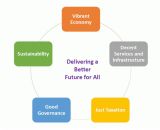
The next Programme for Government should be focused on delivering five key outcomes: a vibrant economy, decent services and infrastructure, just taxation, good governance and sustainability. Each of these is essential if Ireland is to have a fairer future. These five areas of policy need to be addressed urgently if Ireland is to move towards being a society characterised by solidarity and fairness. They form the core of Social Justice Ireland’s proposed framework for the next Programme for Government.