There is an urgent need for ambitious, cohesive and transformative economic policies and for Europe’s need to face challenges collectively, and in solidarity. But Europe must do more. The upcoming challenges are daunting: not just the ecological and economic failure brought on by the coronavirus pandemic and the risk of a debt-deflationary downward economic spiral, but also the economic divergences that have led to the rise of anti-Europe sentiment, nationalism and populism; and the grave, even terrifying ecological risks that transcend borders.
“Ireland, and indeed the planet, face several crises ranging from pandemic to pollution to poverty; a situation where ‘business as usual’ can mean only social and environmental catastrophe. We have reached a point where adoption of a new Social Contract is surely a necessity. All sectors of Irish society should be engaged in an ongoing Social Dialogue to decide how best to proceed” –stated Dr Seán Healy, in his opening address to Social Justice Ireland’s annual policy conference today (Wednesday, 18th November).
Social fairness and solidarity are more important than ever in the European Union if it is to meet the challenges of demographic ageing, climate change and digitalisation and deal with the aftermath of Covid-19. This is according to the latest 'Employment and Social Developments in Europe Report ‘Fairness and Solidarity in the European Social Market Economy’.
On Thursday, 29th October 2020, the President of Ireland, Michael D. Higgins, delivered a speech to the EEAC / NESC Annual Conference on the need for a "Just Transition for All". This speech echoes the themes of our own Annual Social Policy Conference on the need for a New Social Contract, a New Social Dialogue, taking place next Wednesday, 18th November 2020 from 10am. Registration for each of the three sessions is free and open now.
Social Justice Ireland was delighted to contribute to The Journal of Cross Border Studies in Ireland: Volune 15 2020 on the theme “Convergences and Divergences: Agriculture and the environment on the island of Ireland'.
Yesterday (29th October 2020) the CSO published the latest report on The Census Population from an Environment Perspective 2011 and 2016. As the name might suggest, this Report delved into the Census data for 2011 and 2016, to analyse the trends around housing energy use. The results are interesting and highlight a willingness of households to move to more sustaiable home heating. For low income households however, they also underpin the need to have more focused action on retrofitting older homes and increasing energy efficiency.
Social Justice Ireland welcomes progress in Budget 2021on carbon tax, and the commitment to ringfence this revenue for sustainability measures. However we are still a considerable distance from a Just Transtion and the compensation meausures in Budget 2021 are not as comprehensive as they could have been.
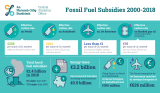
Budget 2021 is an opportunity for this new Government to end to policies that subsidise and encourage the extraction and use of fossil fuels. Without such a move, Ireland cannot cease to be a climate action laggard.
The National Economic Plan - to be published on Budget day - must give equal weight to environmental, social and economic considerations. Otherwise, this Government will simply repeat the mistakes of the past and many will be left behind. The National Economic Plan must be underpinned by a new social contract that treats our environment, society and economy equally
On Wednesday, 18th November 2020 Social Justice Ireland held its Annual Social Policy Conference entitled A New Social Contract, A New Social Dialogue: Building a Better Future. This conference featured presentations by national and international experts as well as a panel discussion with representatives of the five pillars of Social Partnership. All presentations given on the day are contained within this book of conference proceedings.