The effects of COVID-19 will take the heaviest toll on the most vulnerable, both nationally and internationally. The Sustainable Development Goals (SDGs) - a series of 17 high level goals based on 169 targets and over 230 indicators can provide a framework to refocus efforts towards policies to directly help people and communities in the long run and to provide a pathway out of poverty. In our latest policy briefing, we look at Ireland's progress towards the SDGs and provide a series of policy recommendations to improve it.
As we look towards the future and rebuilding our society and our economy we have the opportunity to ensure that our investment strategy reduces carbon emissions, creates a vibrant society and economy, and supports a just transition. Here we outline investment priorities for Budget 2021.
The current State Pension system deprives many people who have spent their lives in caring roles of financial security in their old age. These are people society should be rewarding, not penalising. With the new Programme for Government committing to the proposed Auto Enrolment Plan, an opportunity to increase the fairness of the Irish pension system is being missed, and at a substantial financial cost.
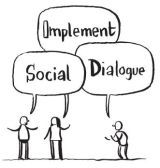
A robust Social Dialogue process with the broad-based enhancement of capabilities in the economy and society at its core would assist in driving a sustainable recovery from the current crisis that will boost business development, improve wellbeing and invest in the future of citizens and communities.
The commitment to using wellbeing indicators alongside economic indicators in the Programme for Government is welcome. Creating a sustainable Ireland requires the adoption of new indicators to measure progress. To reflect this, the wellbeing indicators that the new Government has committed to developing must include new indicators measuring both wellbeing and sustainability in society, to be used alongside measures of national income like GDP, GNP and GNI.
A full analysis of the draft Programme for Government will be published in due course. In the meantime, our initial response highlights 10 positives contained within the PfG and 10 causes for concern. We go on to list other areas contained in the document on which Social Justice Ireland had advocated and campaigned.
An open and transparent policy evaluation process, with meaningful engagement from all stakeholders, would ensure that we learn from our successes and from our mistakes. Such a process would ensure that we evaluate both and offer a framework to take our policy successes and replicate them across Government. Social Justice Ireland believes strongly in the importance of developing a rights-based approach to social, economic, and cultural policy. A key policy measure to deliver an open and transparent policy evaluation process is to measure the socio-economic impact of each budget. This should be a statutory responsibility for Government.
A vibrant economy is most important if Ireland is to produce a fairer future for all. To secure such a future requires us to learn from our mistakes in the past. Solid policies are required that secure the best future for all.
Restructuring agriculture and supporting and incentivising farmers to move to more sustainable agricultural practices is integral to a Just Transition in Ireland. One of the fundamental principles of a Just Transition is to leave no people, communities, economic sectors or regions behind as we transition to a low carbon future. A clear pathway for the farming community outlining how they will be supported as part of a Just Transition, and the benefits of sustainable farming practice to our environment, natural capital and to their household incomes is essential.
As we look towards the future and rebuilding our society and our economy the new Government must consider how we can ensure that our recovery package and investment priorities post COVID-19 help us build a sustainable society and economy, and also move us towards a just transition and meeting our climate targets by 2030.