Our pre-budget submission, 'Budget Choices 2022' contains detailed, fully-costed Budgetary packages across more than a dozen policy areas including health, housing, education, welfare, sustainability…
Our pre-budget submission ‘Budget Choices 2022’ outlines why expenditure will have to rise if the housing strategy, the climate change strategy and the revised national development plan are to…
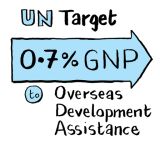
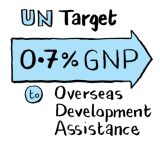
Rebuilding our commitment to ODA and honouring the UN target should be important policy paths for Ireland to pursue in the coming years.
Despite significant progress over the past few months, Ireland remains in a period of enormous uncertainty. Optimistic assumptions point towards a rebound in economic activity and employment from late 2021 or early 2022. Conversely, pessimistic assumptions fear ongoing public health related disruptions and a slow emergence from the Covid-19 crisis. Most likely, the reality lies somewhere in between - but there are limited clues as to where.
Budget Choices 2022 contains detailed, fully-costed Budgetary packages across more than a dozen policy areas including health, housing, education, welfare, sustainability and more; it also contains a range of costed, revenue-raising proposals.
Despite the immediate uncertainty, Budget 2022 must embrace the need for new approaches to how we as a society prioritise choices. People, well-being, public services and a widespread and fair recovery must come first.
The Programme for Government contained several commitments which, if fully resourced and implemented, would represent significant steps towards creating a fairer and more just Ireland. As we emerge into a new post-Covid reality, our latest National Social Monitor looks at whether Government is delivering on its commitments in key areas and suggests that, so far, Government’s achievements are not matching its commitments.
How we plan our finances, and what we choose to prioritise, post-Covid-19, will have profound implications for the future of our economy and society. To this end Social Justice Ireland proposed to the Select Committee on Budgetary Oversight that the priorities for Budget 2022 should be adequate social welfare rates and poverty reduction, just taxation, housing for all and tackling unemployment.
The 2020 United Nations Human Development Report is written in the context of the Covid-19 pandemic, a virus that quickly spread around the globe due to our increasingly interconnected world, but whose impacts have very different consequences for wealthier nations.