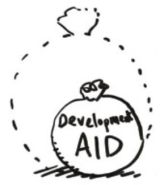
Though Ireland faces a number of significant challenges, it is important to remember that hundreds of millions of people in much poorer countries face a far worse situation. Budget 2021 should at least maintain the nominal financial amount of overseas aid, and - given the inevitable fall in GNI* - could even be used as an opportunity to make inroads on Ireland's UN target.
The current State Pension system deprives many people who have spent their lives in caring roles of financial security in their old age. These are people society should be rewarding, not penalising. With the new Programme for Government committing to the proposed Auto Enrolment Plan, an opportunity to increase the fairness of the Irish pension system is being missed, and at a substantial financial cost.
A full analysis of the draft Programme for Government will be published in due course. In the meantime, our initial response highlights 10 positives contained within the PfG and 10 causes for concern. We go on to list other areas contained in the document on which Social Justice Ireland had advocated and campaigned.
An open and transparent policy evaluation process, with meaningful engagement from all stakeholders, would ensure that we learn from our successes and from our mistakes. Such a process would ensure that we evaluate both and offer a framework to take our policy successes and replicate them across Government. Social Justice Ireland believes strongly in the importance of developing a rights-based approach to social, economic, and cultural policy. A key policy measure to deliver an open and transparent policy evaluation process is to measure the socio-economic impact of each budget. This should be a statutory responsibility for Government.
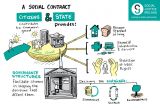
On Friday, 8th May 2020, the Central Statistics Office (CSO) published the results of its survey on the Social Impact of COVID-19. This, as might be expected, makes for concerning reading. The self-reported well-being of the population as a result of the COVID-19 crisis was worse than in 2013, at the height of the impact of the 2008 Financial Crash, with just 12.2 per cent reporting a high life satisfaction rating in April 2020, compared to 31.4 per cent in 2013. The report highlights again the need for a new Social Contract to pave the way for recovery from the impact of COVID-19 and beyond. The impact of job losses on well-being, social inclusion and financial stress are severe and the changes in consumption, particularly the increases in alcohol and tobacco consumption, indicate a potential personal debt and health crisis that must be tackled if society is to function.
Many well-known clothing brands and retailers have responded to the COVID-19 crisis by cancelling orders, or by demanding retroactive price reductions for goods already in production or completed. This is leading to large-scale dismissals of garment workers in developing countries, and to the inability of many companies in these countries to pay their workers. Many of these workers already work for low wages in poor conditions. With little or no social protection, this loss of income leaves garment workers and their families in an incredibly vulnerable position.
All plans for recovery from the present crisis must ensure that the economy and society are treated equally and addressed simultaneously. Analysing the Stability Programme Update (SPU) recently published by Government and reflecting on the commentary on its implications, it is clear that Ireland is in danger of repeating the mistakes of the past. One of the major lessons to be learned from the crisis of 2008/9 and the subsequent recovery is that giving priority to the economy over all else simply leads to some parts of society doing very well while great swathes are left further and further behind.
The decision to put a new social contract and a focus on the wellbeing of Irish people at the heart of the Fianna Fáil/Fine Gael Framework for a New Programme for Government is very welcome. So too is the assertion that there is no going back to the old way of doing things. The fact that the framework recognises the need for new, credible, quality-of-life measures of individual and societal wellbeing and progress, suggest that the next Programme for Government will go beyond economic priorities and targets and take a more holistic approach in its decision-making. Such a development would be very welcome.
Our initial 15-page response to the Fianna Fáil/Fine Gael Framework for a New Programme for Government welcomes some aspects of the plans, raises concerns about others, and proposes a series of specific policy initiatives that would go some distance towards achieving each of the ten mission statements set out in the Framework.
It is important that the developed world do what it can to assist poorer countries in combatting this crisis. First and foremost, this must involve a deal on current levels of sovereign debt in the Global South. Social Justice Ireland supports the call for the permanent cancellation of all external debt payments due from developing countries in 2020, with no accrual of interest or charges or other penalties, and the provision of additional emergency finance that does not create more debt.