Today is International Day of Older Persons. To mark this occasion, we consider a presentation given at our Annual Social Policy Conference last year by Dr. Diarmuid O'Shea on Ageing in Ireland - A Measure of Succes and why we can lead the way! This is an extract only. Dr. O'Shea's full presentation is available to view or to download here.
The latest in the UNICEF Innocenti Report Card Series, Worlds of Influence: Understanding What Shapes Child Well-being in Rich Countries, warns that the world's richest nations must protect child wellbeing in the post-Covid 19 fallout.
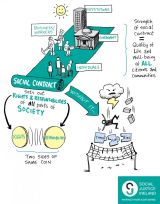
The National Economic Plan - to be published on Budget day - must give equal weight to environmental, social and economic considerations. Otherwise, this Government will simply repeat the mistakes of the past and many will be left behind. The National Economic Plan must be underpinned by a new social contract that treats our environment, society and economy equally
The latest outpatient waiting lists indicate that 601,362 patients were awaiting an appointment as of July 2020, an increase of 8 per cent on January 2020 and 66.7 per cent since 2014. Almost 20 per cent were waiting 0-3 months while 22.8 per cent were waiting 18 months or more. With COVID-19 case numbers again increasing, these waiting lists are likely to continue to rise.
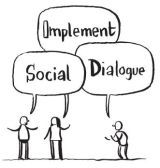
On Wednesday, 18th November 2020 Social Justice Ireland held its Annual Social Policy Conference entitled A New Social Contract, A New Social Dialogue: Building a Better Future. This conference featured presentations by national and international experts as well as a panel discussion with representatives of the five pillars of Social Partnership. All presentations given on the day are contained within this book of conference proceedings.
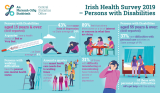
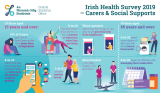
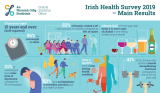
Ireland has an increasingly ageing population and it is imperative, both from the perspective of the individual and the supporting structures, that ageing in place becomes the default approach.
People should be assured of the required treatment and healthcare in their times of illness and vulnerability. The standard of care available is dependent to a great degree on the resources made available, which in turn are dependent on the expectations of society. Covid-19 put an unprecedented strain on our healthcare system, however the systemic issues and overreliance on acute services which dominated the Irish healthcare infrastructure pre-Covid only served to exacerbate the problem.
The current State Pension system deprives many people who have spent their lives in caring roles of financial security in their old age. These are people society should be rewarding, not penalising. With the new Programme for Government committing to the proposed Auto Enrolment Plan, an opportunity to increase the fairness of the Irish pension system is being missed, and at a substantial financial cost.
A full analysis of the draft Programme for Government will be published in due course. In the meantime, our initial response highlights 10 positives contained within the PfG and 10 causes for concern. We go on to list other areas contained in the document on which Social Justice Ireland had advocated and campaigned.
An open and transparent policy evaluation process, with meaningful engagement from all stakeholders, would ensure that we learn from our successes and from our mistakes. Such a process would ensure that we evaluate both and offer a framework to take our policy successes and replicate them across Government. Social Justice Ireland believes strongly in the importance of developing a rights-based approach to social, economic, and cultural policy. A key policy measure to deliver an open and transparent policy evaluation process is to measure the socio-economic impact of each budget. This should be a statutory responsibility for Government.