Local government has the potential to transform our communities but that potential is not being realised. It is time to harness this potential and deliver more power locally.
In this edition of our National Social Monitor, Social Justice Ireland looks at the budgets of each of the 31 Local Authorities and analyses where the money was spent, and where it wasn’t, to assess the priorities of local government.
What does your Local Authority value? What progress is being made at local level to tackle the causes of issues like housing, job sustainability and climate change? Following the publication of Social Justice Ireland's latest National Social Monitor - Local Issues edition, check out our Local Authority profiles, a one-page overview of each Local Authority area and how it spends its budget on your behalf.
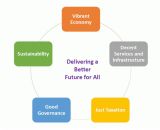
Decisions made by general and local Government affect every one of us. Policies enacted on healthcare, housing, taxation, planning and so on all have an impact on our day to day lives. Part of the ‘Good Governance’ pillar in Social Justice Ireland’s proposed Policy Framework for a Just Society, is the right of all people to meaningfully participate in the decisions and to have their say in shaping their communities and the world around them. These rights are a fundamental part of living in a democracy and, as such, should be experienced by all equally.
Next week, Social Justice Ireland and Trócaire will co-host a hustings event for the Dublin constituency ahead of the European Elections on May 24th. Ahead of this, we have formulated a joint policy platform, with Five Key Policy Asks. They are: The Elimination of Poverty The Championing of Climate Justice Policy Coherence on the SDGs Delivery on the European Pillar of Social Rights Supporting an international treaty on Business and Human Rights
COVID-19 has seen the introduction of unprecedented restrictions on movement, with powers of detention bestowed on medical officers and Gardaí. There are also record numbers of people working from home with remote access to personal data that would otherwise only ever be accessed on work premises. In Episode 11 of our Interview series, Colette Bennett, Research and Policy Analyst chats (remotely) to Doireann Ansbro and Liz Farries of the Irish Council for Civil Liberties on the emergency measures legislation, the data protection implications of the crisis and what this all means from a civil liberties perspective.
In 2016 President Michael D.Higgins spoke of the importance of embracing mulitculturalism when he said "Difference is a resource. Difference is richness. That is the Ireland that is unfolding before us and I welcome it.". With those words, the President laid down a marker to view diversity as a benefit, rather than a drain, enriching all of society. The rise in populism and anti-immigrant sentiment is a danger to society and democracy. It polarises communities and incites hatred, and in some cases, violence. Ireland needs to take a whole of society and policy approach to embrace multiculturalism for the benefit of all.
In the European Edition of our National Social Monitor we look at Transparency and Trust across the EU-28.
In this Spring 2019 publication of our National Social Monitor - European Edition, we outline the present situation on a range of policy issues, comparing Ireland and the rest of Europe, that impact on people’s wellbeing and we assess whether policy is addressing the causes of problems or only their symptoms. All these issues have implications for Ireland’s economy and how the market performs. However, they also have implications for the wellbeing of all of Europe’s population and for the EU.
Social Justice Ireland today launches the latest in our European Research Series 'Recovery in Europe: uneven and incomplete' reviewing the social situation in the 28 EU member states and making some proposals and recommendations for a more sustainable and inclusive future. The report analyses performance in areas such as poverty and inequality, employment, access to key public services and taxation. These areas are examined in light of the key social policy responses of the European Union to the crisis including the social investment package.