On Wednesday, 18th November 2020 Social Justice Ireland held its Annual Social Policy Conference entitled A New Social Contract, A New Social Dialogue: Building a Better Future. This conference featured presentations by national and international experts as well as a panel discussion with representatives of the five pillars of Social Partnership. All presentations given on the day are contained within this book of conference proceedings.
By the end of 2018 there were 6,252 applicants for International Protection living in Direct Provision centres across the State, with centres reaching almost full capacity by December 2018. Since 2002, occupancy has consistently been over 70 per cent of capacity in Ireland’s reception centres. Numerous reports have called for an end to the current system of Direct Provision in Ireland. This must begin with Budget 2021.
Ireland has an increasingly ageing population and it is imperative, both from the perspective of the individual and the supporting structures, that ageing in place becomes the default approach.
The cuts to funding for the Community and Voluntary sector made during the last recession have yet to be restored. Covid-19 has again highlighted the importance of communities. This support must now be formally recognised in Budget 2021 with investment in programmes that support community engagement; deal with deficit demand; tackle social exclusion; and sustain communities.
The current State Pension system deprives many people who have spent their lives in caring roles of financial security in their old age. These are people society should be rewarding, not penalising. With the new Programme for Government committing to the proposed Auto Enrolment Plan, an opportunity to increase the fairness of the Irish pension system is being missed, and at a substantial financial cost.
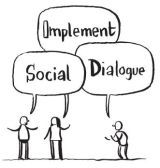
A robust Social Dialogue process with the broad-based enhancement of capabilities in the economy and society at its core would assist in driving a sustainable recovery from the current crisis that will boost business development, improve wellbeing and invest in the future of citizens and communities.
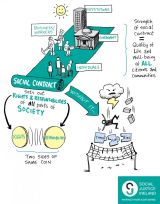
The COVID-19 crisis highlighted, among other things, the importance of community and a community-based response. Yet this importance is often not reflected in the decision-making processes that affect those communities. While the draft Programme for Government makes welcome reference to Social Dialogue at national level, there is a role for local level Social Dialogue also.
A full analysis of the draft Programme for Government will be published in due course. In the meantime, our initial response highlights 10 positives contained within the PfG and 10 causes for concern. We go on to list other areas contained in the document on which Social Justice Ireland had advocated and campaigned.
An open and transparent policy evaluation process, with meaningful engagement from all stakeholders, would ensure that we learn from our successes and from our mistakes. Such a process would ensure that we evaluate both and offer a framework to take our policy successes and replicate them across Government. Social Justice Ireland believes strongly in the importance of developing a rights-based approach to social, economic, and cultural policy. A key policy measure to deliver an open and transparent policy evaluation process is to measure the socio-economic impact of each budget. This should be a statutory responsibility for Government.
Community volunteers have rightly been in receipt of high praise for their response to the COVID-19 crisis. This community spirit is to be commended, however harnessing that engagement for real social change remains a challenge in the context of a highly centralised Government structure.