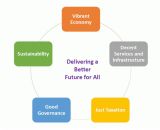
In the Sustainability edition of our National Social Monitor, we assess whether current policy on sustainability encompasses the three pillars of environment, society and economy and make proposals on how to transition towards a sustainable future.
The most recent Intergovernmental Panel on Climate Change (IPCC) Report on Climate Change and Land raises some significant issues for Ireland, and in particular our policies on food production and land management.
The ongoing confusion regarding the funding of applications to the SEAI Deep Retrofitting pilot is disappointing, particularly as one of the headline policies in the Climate Action Plan 2019 to ensure Ireland transitions to a low carbon future is increased retrofitting. Will Budget 2020 deliver the resources required to establish a comprehensive and ambitious retrofitting programme?
A sustainable economy would involve transformative change and policies. The ‘circular economy’ theory is based on the understanding that it is the reuse of vast amounts of material reclaimed from end of life products, rather than the extraction of new resources, that is the foundation of economic growth. In July 2019, the Department of Business, Enterprise and Innovation launched its paper – Realising the opportunities for enterprise in the bioeconomy and circular economy in Ireland, which considers the impact of transitioning to more sustainable practices to provide solutions to ‘issues ranging from climate change, to pollution, to economic and regional development’.
Budget 2020 is an opportunity for government to implement a number of policies which would assist Ireland in meeting its environmental targets. Social Justice Ireland's budget submission contains a number of proposals that would help meet Ireland's targets while also incentivising better behaviour by our citizens and raising hundreds of millions of euros in revenue.
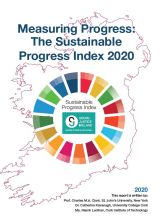
The Government has just launched a new initiative to track Ireland’s progress towards the Sustainable Development Goals (SDGs) – the SDG Hub. The SDG Hub is a Geosite – a website developed in collaboration with Ordinance Survey Ireland, the Central Statistics Office and Esri Ireland – and contains a lot of useful data and information on the SDGs and how Ireland is measuring them. This work complements the Sustainable Progress Index produced each year by Social Justice Ireland, and the call for open source data to fill the gaps which remain in creating a full picture of the SDGs echoes our call to the Minister last year.
Climate change will have the greatest impact on those living in poverty, who have the least capacity to protect themselves. Yet they are responsible for just a fraction of global emissions.
The OECD is seeking public comments on the draft Recommendation on Policy Coherence for Sustainable Development (PCSD). The format of the consultation is a short survey (5 questions) and the deadline for submissions is Friday, 28th June 2019. Social Justice Ireland has published extensively on Ireland's progress towards the SDGs. To support you to make your submission, we have collated our most recent work in this area in one place. Please click 'Read More' to access the latest from Social Justice Ireland on Ireland and the SDGs.
The Climate Action Plan 2019 contains many welcome policy recommendations, the challenge will be to implement them in a manner that is fair and that protects those who will be most impacted. Budget 2020 must put the national interest ahead of short-term sectoral interests if Government is serious about delivering on the Climate Action Plan 2019.
Ireland has the capacity to develop ambitious climate policy - in Budget 2020 we must start to implement it.