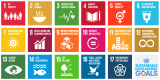
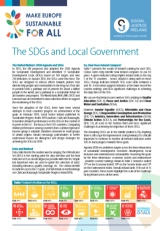
Social Justice Ireland wishes our newly elected MEPs every success. This is a pivotal time for the future of the European Union and MEPs play a key role in ensuring that social and environmental sustainability and the Sustainable Development Goals are at the heart of Europe's future. To this end we have formulated Five Key Policy Asks for our MEPs in conjunction with Trocaire. They are: The Elimination of Poverty The Championing of Climate Justice Policy Coherence on the SDGs Delivery on the European Pillar of Social Rights Supporting an international treaty on Business and Human Rights
Ireland's nature, biodiversity and wildlife contribute €2.6 billion to this country every year, yet the rate of deterioration and decline is accelerating annually. If we are really serious about promoting sustainability and combating climate change and biodiversity loss then protecting nature and biodiversity must be at the heart of the All of Government Climate Plan.
In this edition of our National Social Monitor, Social Justice Ireland looks at the budgets of each of the 31 Local Authorities and analyses where the money was spent, and where it wasn’t, to assess the priorities of local government.
What does your Local Authority value? What progress is being made at local level to tackle the causes of issues like housing, job sustainability and climate change? Following the publication of Social Justice Ireland's latest National Social Monitor - Local Issues edition, check out our Local Authority profiles, a one-page overview of each Local Authority area and how it spends its budget on your behalf.
Next week, Social Justice Ireland and Trócaire will co-host a hustings event for the Dublin constituency ahead of the European Elections on May 24th. Ahead of this, we have formulated a joint policy platform, with Five Key Policy Asks. They are: The Elimination of Poverty The Championing of Climate Justice Policy Coherence on the SDGs Delivery on the European Pillar of Social Rights Supporting an international treaty on Business and Human Rights
In the European Edition of our National Social Monitor we look at how Ireland is performing on our Environmental targets relative to other European countries.
This week, the National Economic & Social Council (NESC) published its report on Addressing Employment Vulnerability as part of a Just Transition in Ireland. With the loss of an estimated 350,000 jobs, the COVID-19 pandemic underscored the impact, social and economic, of job precarity. This report, drafted in response to the need to transition to a fundamentally new economic future associated with the challenges of climate change and digital automation, is also instructive as we face a new reality post-coronavirus. When this crisis passes we will need to develop a new social contract and engage in social dialogue to allow all stakeholders to have a say in shaping that contract.
Among the key findings from the National Social Monitor - European Edition are that quality of housing, the burden of housing costs, financial distress, difficulty in making ends meet and the environment are key issues in Ireland and across the European Union. As we face into European Elections in May these issues are certain to feature strongly.
In this Spring 2019 publication of our National Social Monitor - European Edition, we outline the present situation on a range of policy issues, comparing Ireland and the rest of Europe, that impact on people’s wellbeing and we assess whether policy is addressing the causes of problems or only their symptoms. All these issues have implications for Ireland’s economy and how the market performs. However, they also have implications for the wellbeing of all of Europe’s population and for the EU.
Social Justice Ireland today launches the latest in our European Research Series 'Recovery in Europe: uneven and incomplete' reviewing the social situation in the 28 EU member states and making some proposals and recommendations for a more sustainable and inclusive future. The report analyses performance in areas such as poverty and inequality, employment, access to key public services and taxation. These areas are examined in light of the key social policy responses of the European Union to the crisis including the social investment package.