Digital technology can improve our lives but it also poses a major risk of widening social inequality particularly for people without the skills to navigate digital platforms. As we move towards a future where digital transformation will disrupt the labour market, having the greatest impact on people with lower levels of education and skills, it is important that this cohort are not left behind.
Family poverty remains one of the largest determinants of educational outcomes in Ireland. The benefits of investing in education, to the individual, to the economy and to society, far outweigh any initial outlay of resources. Read Social Justice Ireland's Election Briefing on Education for an outline of a number of key challenges and some policy proposals that should be in the next Programme for Government.

A recent publication from the Central Statistics Office, Post-Primary Outcomes – Academic Years Ending 2012 & 2013, analyses outcomes in 2012 – 2017 for two post-primary academic cohorts; 2011/2012 and 2012/2013. It examines outcomes in terms of education and training, substantial employment, and earnings over time.
At our 32nd annual Social Policy Conference last month, Mick Clifford (Irish Examiner, Irish Journalist of the Year 2016) interviewed Roddy Doyle, Booker Prize Winner in 1993, and one of Ireland's greatest living authors.
Technological change is coming whether we like it or not. The question is are we doing enough to prepare for it? More specifically are we doing enough to support those workers who will be most impacted by the changes that are on the horizon?
International Literacy Day gives us the opportunity to remember the importance of literacy, to celebrate the progress we have made, and a chance to reinvigorate efforts to address the literacy challenges that we still face.
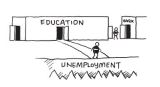
Two studies published recently by the Central Statistics Office show that a greater percentage of graduates from Higher and Further education were in substantial employment one year after graduation than in 2010, and that the higher the educational attainment, the higher the income. Education has the capacity to be transformative, particularly for those in lower socioeconomic groups. Government must prioritise equality of both access and opportunity to education for all.
The negative impact on rural towns and communities from the potential fallout from Brexit is receiving welcome attention at present. But what about the other threat to rural Ireland and regional development - the impact that automation and robotics will have on employment across the regions? This issue should be front and centre as Government rolls out the Climate Action Plan and the National Development Plan.
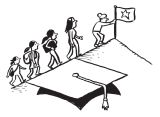
Investment in education at all levels and throughout the life cycle can deliver a more equal society and prepare citizens to participate in a democracy. Social Justice Ireland has proposed a €429m education package for Budget 2020 that includes investment in areas such as adult literacy, DEIS, skills development, and community education.
Social Justice Ireland wishes our newly elected MEPs every success. This is a pivotal time for the future of the European Union and MEPs play a key role in ensuring that social and environmental sustainability and the Sustainable Development Goals are at the heart of Europe's future. To this end we have formulated Five Key Policy Asks for our MEPs in conjunction with Trocaire. They are: The Elimination of Poverty The Championing of Climate Justice Policy Coherence on the SDGs Delivery on the European Pillar of Social Rights Supporting an international treaty on Business and Human Rights