Social fairness and solidarity are more important than ever in the European Union if it is to meet the challenges of demographic ageing, climate change and digitalisation and deal with the aftermath of Covid-19. This is according to the latest 'Employment and Social Developments in Europe Report ‘Fairness and Solidarity in the European Social Market Economy’.
We are well aware of the short-term health, social and economic impacts of Covid-19. But what about the long-term impacts that the pandemic has caused, partciularly the disruption to education and learning. The latest research indicates that students impacted are facing at least a 3 per cent loss of income compared to peers in previous years throughout their lifetimes, with disadvantaged students being worst affected.
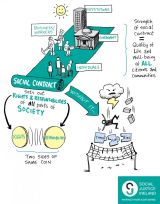
The National Economic Plan - to be published on Budget day - must give equal weight to environmental, social and economic considerations. Otherwise, this Government will simply repeat the mistakes of the past and many will be left behind. The National Economic Plan must be underpinned by a new social contract that treats our environment, society and economy equally
Earlier this year, the United Nations General Assembly proclaimed 9 September the International Day to Protect Education from Attack. The announcement coincided with the fifth anniversary of the Safe Schools Declaration, which Ireland endorsed in May 2015. Education has been a focus for most countries in the context of the current pandemic, and correlations exist between educational attainment and rates of poverty and deprivation. In areas of armed conflict, the protection of education from attack can literally be a matter of life and death, as detailed in a recent report from the Global Coalition to Protect Education from Attack.
As children all over the country returned to school, the findings of the latest Survey from the Central Statistics Office - Social Impact of COVID-19 Survey August 2020: The Reopening of Schools – provides insights into the impact of #StayHomeStaySafe on children’s education.
The CSO has just published ‘Ireland's UN SDGs 2019 - Report on Indicators for Goal 4 Quality Education’. The CSO report monitors how Ireland is progressing towards meeting its targets under the 17 UN Sustainable Development Goals (SDGs). It examines three key areas, Childhood Education, Adult Education and Education Infrastructure.
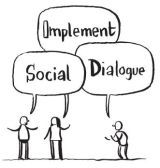
On Wednesday, 18th November 2020 Social Justice Ireland held its Annual Social Policy Conference entitled A New Social Contract, A New Social Dialogue: Building a Better Future. This conference featured presentations by national and international experts as well as a panel discussion with representatives of the five pillars of Social Partnership. All presentations given on the day are contained within this book of conference proceedings.
Education is widely recognised as crucial to the achievement of our national objectives of economic competitiveness, social inclusion, and active citizenship. However, the levels of public funding for education in Ireland are out of step with these aspirations. Here we outline priority areas for investment in education in Budget 2021.
The current State Pension system deprives many people who have spent their lives in caring roles of financial security in their old age. These are people society should be rewarding, not penalising. With the new Programme for Government committing to the proposed Auto Enrolment Plan, an opportunity to increase the fairness of the Irish pension system is being missed, and at a substantial financial cost.
A full analysis of the draft Programme for Government will be published in due course. In the meantime, our initial response highlights 10 positives contained within the PfG and 10 causes for concern. We go on to list other areas contained in the document on which Social Justice Ireland had advocated and campaigned.