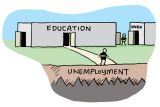
This section of our National Social Monitor: Care looks at education needs as an issue of lifelong care for learning. This section of our National Social Monitor: Care looks at education needs…
In this socio-economic review for 2024 Social Justice Ireland presents a detailed analysis of a range of key matters which are central to social justice; a vision of…
The establishment of a Child Poverty and Well-being Programme Office in the Department of the Taoiseach was a key step towards delivering on the Taoiseach’s commitment "to make Ireland the best…
Child poverty does not exist in a vacuum. Children live in families, households, and societies. They are impacted by the physical environment in which they live. While the establishment of a Child…
Investment in education at all levels is essential in Budget 2024. Our education system is still dealing with the long-term fallout in the impact of learning from Covid-19, including the…
‘Europe from Pandemic to Polycrisis’ reviews the social situation in the 27 EU member states and makes some proposals and recommendations for a more sustainable and inclusive future. This…
‘Europe from Pandemic to Polycrisis’ examines recent social developments in Europe against the backdrop of recovery from the Covid-19 pandemic and the outbreak of war in Ukraine. The report, a part…
Budget 2024 should be guided by one core principle, that the measures adopted prioritise the protection of the most vulnerable groups in our society. There must be no repetition of the outcome…
Budget 2024 should be guided by one core principle, that the measures adopted prioritise the protection of the most vulnerable groups in our society. Government must learn from the…
Increasing labour force participation, in particular among women, represents a further policy challenge for labour market policy. As Table 1 illustrates, the proportion of individuals who are…