Our pre-budget submission, 'Budget Choices 2022' contains detailed, fully-costed Budgetary packages across more than a dozen policy areas including health, housing, education, welfare, sustainability…
Our pre-budget submission ‘Budget Choices 2022’ outlines why expenditure will have to rise if the housing strategy, the climate change strategy and the revised national development plan are to…
Mitigating the impact of Covid-19 learning loss on our children and young people requires significant, long-term resourcing. Social Justice Ireland welcomes the announcement of Covid…
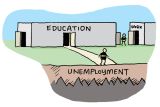
Investment in education at all levels is essential in Budget 2022. The Covid-19 crisis has generated the greatest disruption in educational opportunity worldwide in a generation and has exacerbated existing inequalities within our education system. Without sufficient levels of investment this impact will be felt for generations.
‘Ireland and the Europe 2020 Strategy - A review of the social inclusion aspects of Ireland’s National Reform Programme’ covers three of the five headline targets established in the Europe 2020 Strategy and addressed in the Irish National Reform Programme, namely, employment, education and ‘poverty and social exclusion’. It is the latest in a series that since 2011 has tracked Ireland’s performance on achieving its own targets in the Europe 2020 Strategy.
Social Justice Ireland’s report ‘Ireland and the Europe 2020 Strategy - A review of the social inclusion aspects of Ireland’s National Reform Programme’ has found that overall, current trends in Irish public policy are running counter to the promotion of ‘inclusive growth,’ which is one of the three key priorities which underlie the Europe 2020 Strategy.
Despite significant progress over the past few months, Ireland remains in a period of enormous uncertainty. Optimistic assumptions point towards a rebound in economic activity and employment from late 2021 or early 2022. Conversely, pessimistic assumptions fear ongoing public health related disruptions and a slow emergence from the Covid-19 crisis. Most likely, the reality lies somewhere in between - but there are limited clues as to where.
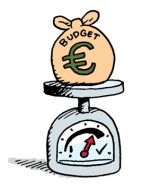
Budget Choices 2022 contains detailed, fully-costed Budgetary packages across more than a dozen policy areas including health, housing, education, welfare, sustainability and more; it also contains a range of costed, revenue-raising proposals.
Despite the immediate uncertainty, Budget 2022 must embrace the need for new approaches to how we as a society prioritise choices. People, well-being, public services and a widespread and fair recovery must come first.
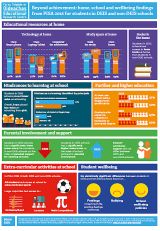
A report from the Educational Research Centre examining the home and school learning environments of 15-year olds in DEIS and non-DEIS schools provides a detailed examination of the home and backgrounds of students in DEIS and non-DEIS schools and examines broader issues including wellbeing, the value that students place on education, their motivation, and aspirations for future learning and employment.