A report published yesterday by the Organisation for Economic Cooperation and Development (OECD) has criticised Ireland’s performance in key areas such as health and housing.
In the most recent, and high-profile, mortgage sale, Permanent TSB this week announced its intention to sell 14,000 non-performing mortgage loans. Some commentators have suggested that, instead of selling these loans, that individual borrowers be allowed to ‘make a deal’ with the lender to buy the loan at the intended sale price. However, this solution is too simplistic.
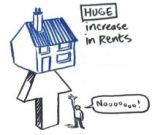
The Daft.ie Rental Report released today showed that private rents continue to rise in Ireland, with average rent nationally now standing at €1,227 and reaching a high of €1,995 in South County Dublin. There were 85,799 households (235,947 people) on the social housing waiting list in June 2017, a decrease of 6% from September 2016, however over half of that decrease is attributable to transfers from Rent Supplement to the Housing Assistance Payment (HAP).
While the economy is doing well, it is crucial that policy-makers realise that many on lower incomes are not benefiting as they should. Almost 800,000 people in Ireland are living in poverty, a quarter of a million of whom are children. 1 million people in Ireland are experiencing deprivation. 105,000 people are working in a job with income so low they are living in poverty. Social Justice Ireland has a plan to fix this, and to build a fairer society for all.
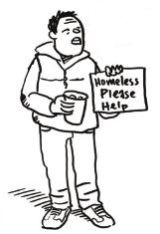
The current approach to housing policy in Ireland is not working; the private sector will never build social housing units on the scale required. Government must commit to building sufficient social housing units to eliminate the current housing waiting list. This is the only way to address Ireland’s ongoing housing and homelessness crisis. This is a key finding of Social Justice Ireland's National Social Monitor 2017.
The National Social Monitor is Social Justice Ireland’s annual contribution to the public debate that is needed on Ireland’s future and how Ireland is performing in terms of promoting the wellbeing of all in society. It examines progress in areas such as housing, healthcare, education, employment, rural development and the environment among others.
The European Commission has just published the 2017 Country Specific Recommendations for Ireland, accompanied by an assessment of Ireland's National Reform Programme and 2017 Stability Programme. This forms part of the European Semester process. Social Justice Ireland's initial response to the Country Specific Recommendations is available below.
Ireland’s social contract is broken. The legitimate expectations of citizens are not being met. This is most obvious in areas such as housing and homelessness, a two-tier healthcare system, an ongoing failure to provide rural broadband and high levels of poverty and social exclusion, especially among children. 2017 is the first year of a new century for Ireland and now is the perfect opportunity to develop a new and radical social contract for Ireland’s second century.
Economic recovery has yet to be experienced by large numbers of people in Europe. Many remain excluded as they continue to lose out in employment, education, healthcare, poverty and related services. This is undermining the confidence many people had in the European project because they see the EU constantly giving priority to economic issues ahead of social challenges.
'Europe: The Excluded Suffer while Europe Stagnates’ is the tenth publication in Social Justice Ireland’s European Research Series. The report reviews the social situation in the 28