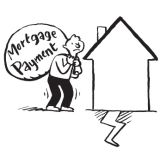
The Central Bank issued its quarterly Residential Mortgage Arrears & Repossession Statistics report for Q4 2018. While the number of mortgages in arrears has again decreased, the rise in sales to non-bank entities of both performing and non-performing loans continues to put homeowners at risk.
The release announcing the latest social housing output data last week would indicate that Rebuilding Ireland is exceeding its targets in the provision of social housing to those on low incomes. Unfortunately, the reality is that 45% of local authorities failed to meet their build targets and reliance on the private rented market to provide answers continues.
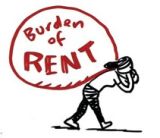
The most recent Daft.ie Report shows that, while the rate of rent inflation may now be slowing, rents are still higher than they were before the Recession, with the average national rent reaching €1,347 per month. Rebuilding Ireland, the Government's main housing policy document, relies heavily on the private rented sector as a sort of 'societal cure all', however this reliance (supported through subsidies and tax reliefs) is only serving to drive up rents until they are beyond the reach of many households. Add to that the Minister's latest directive, that families who turn down more two social housing options will be suspended from the housing list for five years, and we clearly have a Government out of touch with the reality of low income households.
A study published in the Journal of Epidemiol & Community Health has found that ‘housing tenure, cost burden and desire to stay in own home’ are all associated with higher levels of C-reactive protein (CRP), a biomarker associated with infection and stress. With the number of households in private rented accommodation continuing to rise in Ireland, what does this mean for future generations and what policy responses are needed?
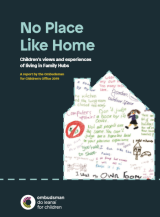
Homelessness influences every facet of a child’s life from conception to young adulthood and the experience of homelessness inhibits the physical, emotional, cognitive, social, and behavioural development of children.
On the centenary of the first meeting of Dáil Éireann, it is time to reflect on the commitment made by the Irish Government to the children of Ireland.
Recent commentary that homelessness in Ireland is ‘normal’ is completely without foundation. As the economy has continued to improve, the homelessness and housing crises have worsened. Family and child homelessness have increased by over 320 per cent since 2014. This is not normal, this demands an emergency response.
700,000 on healthcare waiting lists, 500,000 homes without broadband, over 11,000 people homeless – a result of Government policy failing to tackle causes - Social Justice Ireland publishes National Social Monitor Winter 2018.
In order to improve the wellbeing of everyone in society, at all stages of the life cycle, it is vital that our policies address the causes of problems rather than their symptoms only. It is through this lens that Social Justice Ireland examines the ten policy areas in the National Social Monitor.
New Programme for Government must address rampant inequalities in Irish society