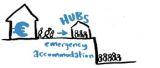
In 2017, the Government introduced Family Hubs as an alternative to hotels and B&Bs and described as a “first step” for families experiencing homelessness. Later that year, the Irish Human Rights and Equality Commission (IHREC) warned of the risks associated with Family Hubs, of institutionalising families and normalising family homelessness. This warning was ignored, with Minister Murphy urging local authorities to build more rapid build Family Hubs at the Second Housing Summit in January 2018, and increased funding for Family Hubs provided in Budget 2019. A report published by the Office of the Children’s Ombudsman (OCO) this week (18 April 2019) shows just how prescient IHREC’s warnings were, as children as young as 10 describe their living conditions as being “like a prison”.
In the European Edition of our National Social Monitor we look at how Ireland compares with other EU-28 countries in the areas of housing conditions and rent affordability.
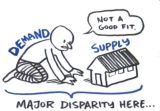
There are over 67,000 tenants paying market rent spending more than 40% of their disposable income on housing costs. Clearly more affordable, sustainable housing is needed. When added to the almost 72,000 households on the social housing waiting list, and the 54,000 households in receipt of the Housing Assistance Payment (HAP), the true scale of the housing crisis becomes clear.
According to the latest data released by the Central Bank of Ireland (the Central Bank), non-bank entities held 84,658 home mortgages up to the end of 2018, of which 25,469 are held by unregulated loan owners. While a larger percentage of these loans are in late stage mortgage arrears than those held by banks, an increasing proportion are not in arrears. Borrowers who made the decision to enter into one of the most major contracts of their lives, the mortgage on their home, may not be aware of who owns that mortgage and what, if any, protections they have if they get into difficulty making payments. The Oireachtas is currently considering the No Consent, No Sale Bill 2019 which aims to curb mortgage transfers without the consent of the borrower, with some saying it’s a step too far and will damage the banking industry. But what about the borrowers? In terms of consumer protection, does it go far enough?
Among the key findings from the National Social Monitor - European Edition are that quality of housing, the burden of housing costs, financial distress, difficulty in making ends meet and the environment are key issues in Ireland and across the European Union. As we face into European Elections in May these issues are certain to feature strongly.
In this Spring 2019 publication of our National Social Monitor - European Edition, we outline the present situation on a range of policy issues, comparing Ireland and the rest of Europe, that impact on people’s wellbeing and we assess whether policy is addressing the causes of problems or only their symptoms. All these issues have implications for Ireland’s economy and how the market performs. However, they also have implications for the wellbeing of all of Europe’s population and for the EU.
The impact of COVID-19, the coronavirus, has highlighted the weaknesses in both Ireland’s social and economic structures. One such area is housing, particularly for those in communal and cramped accommodation who cannot social distance, self-isolate or, in some cases, avail of adequate washing facilities. In the latest episode of our podcast, Social Justice Matters, we chat (remotely) to Orla Hegarty, Architect and Lecturer in the School of Architecture, Planning and Environmental Policy in UCD, to discuss housing policy, construction safety and COVID-19, and the lessons to be learned for housing from this crisis.
Social Justice Ireland today launches the latest in our European Research Series 'Recovery in Europe: uneven and incomplete' reviewing the social situation in the 28 EU member states and making some proposals and recommendations for a more sustainable and inclusive future. The report analyses performance in areas such as poverty and inequality, employment, access to key public services and taxation. These areas are examined in light of the key social policy responses of the European Union to the crisis including the social investment package.
‘Recovery in Europe: uneven and incomplete’ is the twelfth publication in Social Justice Ireland’s European Research Series. The purpose of our European Research Series is tocontribute to the debate and discussion on policy issues that affect all members of the European Union. To date this research series has produced comprehensive reviews of Ireland’s performance towards its Europe 2020 targets, a comprehensive examination of the impact of policies pursued by the European Union and its members states after the financial crisis of 2008 and an extensive analysis of how European member states have been performing in terms of social and economic targets after the crisis. Some of this research focussed on those countries most affected by the crisis.
In the first quarter of each year the European Commission release its Country Report for Ireland, detailing its review of the current economic situation, Ireland’s progress with country-specific recommendations previously made by the European Commission, and setting out reform priorities for Ireland in the coming year. In our initial response to this year’s report, Social Justice Ireland welcomed the focus on a number of key areas and set out our proposals on how Ireland might respond to the Country Specific Recommendations.