While the economy is doing well, it is crucial that policy-makers realise that many on lower incomes are not benefiting as they should. Almost 800,000 people in Ireland are living in poverty, a quarter of a million of whom are children. 1 million people in Ireland are experiencing deprivation. 105,000 people are working in a job with income so low they are living in poverty. Social Justice Ireland has a plan to fix this, and to build a fairer society for all.
Social Justice Ireland were honoured to have President of Ireland Michael D. Higgins deliver the key note address at our 30th Annual Social Policy Conference. Click here to watch the video of his presentation, or download his paper, entitled On The Discourse That We Need.
This year's conference featured an excellent and diverse line-up of speakers from Spain, Italy, Germany, the USA, and Ireland. The key note address was delivered by President of Ireland Michael D. Higgins. Click in to download papers from the conference, watch the presentations, see our handy summary graphics, or download the entire conference booklet for free.
The National Social Monitor is Social Justice Ireland’s annual contribution to the public debate that is needed on Ireland’s future and how Ireland is performing in terms of promoting the wellbeing of all in society. It examines progress in areas such as housing, healthcare, education, employment, rural development and the environment among others.
Social Justice Ireland has joined more than 250 non-government organisations from across Europe who have today released an alternative vision for a more democratic, just and sustainable Europe. Intended to influence the debate on the future direction of Europe, this alternative vision is endorsed by organisations representing a multitude of public interest issues, including labour rights, culture, development, environment, health, women’s rights, youth, and anti-discrimination groups.
The European Commission has just published the 2017 Country Specific Recommendations for Ireland, accompanied by an assessment of Ireland's National Reform Programme and 2017 Stability Programme. This forms part of the European Semester process. Social Justice Ireland's initial response to the Country Specific Recommendations is available below.
Regional variations in employment trends point to imbalanced economic growth that is not benefiting all parts of the country equally. This is one of the key findings from the latest Employment Monitor. Jobs growth over the last couple of years has been impressive and very welcome, but when it is broken down by region, trends are very uneven.
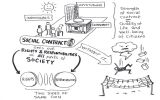
Ireland’s social contract is broken. The legitimate expectations of citizens are not being met. This is most obvious in areas such as housing and homelessness, a two-tier healthcare system, an ongoing failure to provide rural broadband and high levels of poverty and social exclusion, especially among children. 2017 is the first year of a new century for Ireland and now is the perfect opportunity to develop a new and radical social contract for Ireland’s second century.
Social Justice Ireland has published its annual review of the social inclusion aspects of Ireland's National Reform Programme and the Europe 2020 Strategy. The review examines I
The executive summary of Social Justice Ireland's Socio-Economic Review 2017 'A New Social Contract for a New Century' is available below.