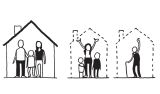
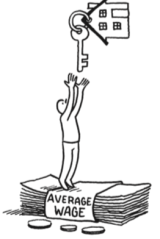
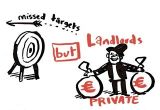
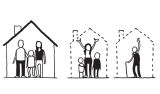
A lack of social housing is putting pressure on almost 69,000 households on the official waiting lists, and forcing an additional 40,000-50,000 households into precarious private tenancies and over 10,000 people into homelessness. Social distancing is difficult for overcrowded households with multiple generations under one roof, and simply impossible for those living in emergency accommodation, Direct Provision and refuges for domestic abuse. Ireland needs more social housing. However, the latest data released by the Department of Housing, Planning and Local Government show a continued reliance on private rented subsidies.
The decision to put a new social contract and a focus on the wellbeing of Irish people at the heart of the Fianna Fáil/Fine Gael Framework for a New Programme for Government is very welcome. So too is the assertion that there is no going back to the old way of doing things. The fact that the framework recognises the need for new, credible, quality-of-life measures of individual and societal wellbeing and progress, suggest that the next Programme for Government will go beyond economic priorities and targets and take a more holistic approach in its decision-making. Such a development would be very welcome.
Our initial 15-page response to the Fianna Fáil/Fine Gael Framework for a New Programme for Government welcomes some aspects of the plans, raises concerns about others, and proposes a series of specific policy initiatives that would go some distance towards achieving each of the ten mission statements set out in the Framework.
Despite the inevitable economic aftermath of the current pandemic, the Government of the 33rd Dáil can make significant inroads into the challenges Ireland faces over the next five years. The next Programme for Government must deliver on five key areas: a vibrant economy, decent services and infrastructure, just taxation, good governance and sustainability.
The most pressing piece of health advice, apart from washing your hands, to come out of the COVID-19 pandemic is the need for social distancing. But for thousands of people living in emergency homeless accommodation, Direct Provision, refuges and Travellers living in cramped conditions, social distancing just isn’t an option. The announcement yesterday of 650 spaces being made available is a welcome step, but doesn’t go nearly far enough. There are over 245,000 vacant properties across Ireland. Property website Daft.ie reported a 13% increase in rental advertisements this month. Now is the time to utilise emergency powers and #MoveTheVulnerableOut.
As we face into the most difficult and challenging times most of us have ever known, it is important to acknowledge that despite well documented problems and challenges, Ireland is in the privileged position of having public services and social infrastructure to rely on at a time of crisis. In the coming months, when we begin to think of the future beyond the current crisis, we need to consider how we can deliver a social contract to meet our needs in changing times?
The European Union faces many challenges in relation to healthcare, cost of housing and financial distress that will be further exacerbated by the Covid-19 pandemic. This is one of the key findings from the National Social Monitor – European Edition. In this Spring 2020 edition of our National Social Monitor, Social Justice Ireland outlines the present situation on a range of policy issues, comparative to the rest of Europe, that impact on people’s wellbeing and looks at what policies can be introduced to support the most vulnerable.
Social justice matters. That is why Social Justice Ireland publishes our annual socio-economic review. This book is about charting a course to a fairer Ireland. At the foundation of that is what…
Additional supply of affordable homes is a key part of addressing the housing crisis, but what of those in precarious housing situations? In this article we look at those on the social housing waiting lists and those in mortgage difficulty.
Social Justice Ireland believes strongly in the importance of developing a rights-based approach to social, economic, environmental, and cultural policy. Such an approach would go a long way towards addressing the inequality Ireland has been experiencing and should be at the heart of the development model for a just society. We believe that the next Programme for Government should acknowledge and recognise seven economic, social and cultural rights.