A full analysis of the draft Programme for Government will be published in due course. In the meantime, our initial response highlights 10 positives contained within the PfG and 10 causes for concern. We go on to list other areas contained in the document on which Social Justice Ireland had advocated and campaigned.
Over ten years on from the financial crash, and after six years of economic growth, before the onset of Covid-19, across the European Union there were 16.8 million people unemployed, 6.65 million people long-term unemployed, and 86 million people living in poverty of whom 19 million were children. This presents significant challenges as Europe grapples with the social and economic consequences of the current crisis.
‘A Rising Tide Failing to Lift All Boats’ is the latest publication in Social Justice Ireland’s European Research Series. This report analyses performance in areas such as poverty and inequality, employment, access to key public services and taxation. The report also points to key policy proposals and alternatives for discussion. These include the right to sufficient income, meaningful work and access to essential quality services. The policy proposals explore how these areas might be delivered upon in a changing world.
An open and transparent policy evaluation process, with meaningful engagement from all stakeholders, would ensure that we learn from our successes and from our mistakes. Such a process would ensure that we evaluate both and offer a framework to take our policy successes and replicate them across Government. Social Justice Ireland believes strongly in the importance of developing a rights-based approach to social, economic, and cultural policy. A key policy measure to deliver an open and transparent policy evaluation process is to measure the socio-economic impact of each budget. This should be a statutory responsibility for Government.
Government should strive to create a new economic model based on fairness. This would ensure that the benefits accruing from a vibrant economy would be distributed in a more equal manner. Addressing poverty and social exclusion will play a key role in this regard. The new Government should set an ambitious national poverty reduction target and make persistent poverty the primary indicator of poverty measurement.
Life on a low income is the norm for a large proportion of our society. Prior to the current public health crisis, one in every seven people in Ireland lived with an income below the poverty line; about 680,000 people. Looking ahead, these numbers look set to rise as the very uneven impact of the Covid-19 crisis unfolds.
Poverty focus is an annual publication from Social Justice Ireland where we focus on the nature and experience of poverty in Ireland. Drawing on the available statistical evidence, we outline how poverty is measured, the value of the poverty line and consider many of the groups in our society who are most exposed to living life below the poverty line.
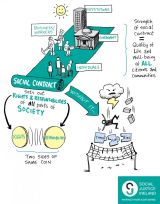
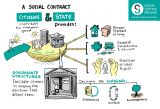
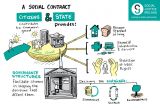
On Friday, 8th May 2020, the Central Statistics Office (CSO) published the results of its survey on the Social Impact of COVID-19. This, as might be expected, makes for concerning reading. The self-reported well-being of the population as a result of the COVID-19 crisis was worse than in 2013, at the height of the impact of the 2008 Financial Crash, with just 12.2 per cent reporting a high life satisfaction rating in April 2020, compared to 31.4 per cent in 2013. The report highlights again the need for a new Social Contract to pave the way for recovery from the impact of COVID-19 and beyond. The impact of job losses on well-being, social inclusion and financial stress are severe and the changes in consumption, particularly the increases in alcohol and tobacco consumption, indicate a potential personal debt and health crisis that must be tackled if society is to function.
To unravel the two-tier welfare system that has been temporarily created as a result of the COVID-19 crisis, and to truly deliver a fair and sustainable economy the new Government should develop a programme to index social welfare rates to the Minimum Essential Standard of Living over a five-year term.
All plans for recovery from the present crisis must ensure that the economy and society are treated equally and addressed simultaneously. Analysing the Stability Programme Update (SPU) recently published by Government and reflecting on the commentary on its implications, it is clear that Ireland is in danger of repeating the mistakes of the past. One of the major lessons to be learned from the crisis of 2008/9 and the subsequent recovery is that giving priority to the economy over all else simply leads to some parts of society doing very well while great swathes are left further and further behind.