The Central Statistics Office recently published the Household Finance and Consumption Survey 2018. This is the only household survey that collects combined information on asset, income and debt levels of Irish households. It provides us with a valuable data and insight into where wealth and assets are concentrated (both in terms of location and income deciles), and the levels of debt of Irish households.
Ireland has one of the most unequal distributions of market income in the European Union. We rely heavily on our tax and social welfare systems to produce a more equal society. High rates of poverty and income inequality have been the norm in Irish society for some time. Read Social Justice Ireland's Election Briefing on Income for an outline of a number of key challenges facing Ireland and some policy proposals that should be in the next Programme for Government.
Last week, the Central Statistics Office published the results of its annual Pensions Survey. Much of the reaction suggested that things would be much better if private pension coverage in Ireland was higher than it is. However given its expense, and the way the benefits accrue mainly to the better off, we're not so sure. Here's the counter argument....
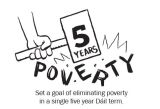
Ireland has been without a National Action Plan for Social Inclusion for over two years, a failure of Government to protect the most vulnerable in society. Yesterday (14th January 2020) the Department of Employment Affairs and Social Protection published the Roadmap for Social Inclusion 2020-2025 which “sets out the Government’s ambition for Ireland to become one of the most socially inclusive States in the EU, defines a number of specific targets to be achieved and details a number of key commitments to deliver on this ambition and these targets” – but is this ambition enough? Our review suggests that there will be almost the same number of people in poverty in 2025 as in 2018.
Dr Elizabeth Nixon (TCD) gave a presentation on children’s lives in Ireland, including some key findings from the Growing Up In Ireland survey, at our recent Social Policy Conference. One of the key messages to emerge from the GUI data is that children in Ireland are generally doing very well in terms of their development. Notwithstanding this, a substantial minority of children are displaying difficulties across one or more developmental domains. Dr Nixon outlines with these difficulties are and also examines the role that family structure and family relationships play in children’s lives.
The poverty rates for single person households have risen notably in the last decade, while they have fallen or remain more-or-less static for others. Increased poverty for those living alone is keeping Ireland's poverty rates high and presents a policy challenge for government.
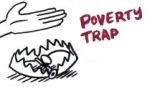
More than 689,000 people are living in poverty in Ireland, of which over 200,000 are children. Despite moderate improvements in poverty rates and numbers, which are very welcome, there are an extra 36,000 people living in poverty in Ireland today compared to a decade ago.
Basic Income is back on the agenda. Social Justice Ireland were delighted to take part in Basic Income Ireland's Annual Forum - Basic Income, Social Justice and Sustainability - discussing how a Universal Basic Income could be integrated into plans for a Just Transition. We were also interested to note that the Scottish National Party have included Basic Income as part of its plans for an independent Scotland. In the latest episodes of our podcast, Social Justice Matters, we revisit our Basic Income conference from 2016 to hear from Social Justice Ireland founders Brigid Reynolds and Dr. Seán Healy on why now is the time to grasp the nettle. You can also listen to a short tutorial on Basic Income: the what, the why and the how. Listen in from our website, on Spotify, iTunes, PodBean, or Podcast Republic.
As the DEASP announces some key design features of its proposed Automatic Enrolment pension scheme, our analysis suggests that AE represents poor value for money, with minimal benefit to the State unless the long-term plan is to run down the value of the State pension and force people to rely on their private savings.
What income changes arose from the tax and benefit measures taken in Budget 2020? What are the effective tax rates now for different levels of income, and how do they compare with effective rates over time? Click here to see.