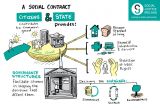
An open and transparent policy evaluation process, with meaningful engagement from all stakeholders, would ensure that we learn from our successes and from our mistakes. Such a process would ensure that we evaluate both and offer a framework to take our policy successes and replicate them across Government. Social Justice Ireland believes strongly in the importance of developing a rights-based approach to social, economic, and cultural policy. A key policy measure to deliver an open and transparent policy evaluation process is to measure the socio-economic impact of each budget. This should be a statutory responsibility for Government.
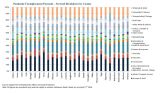
As we navigate the crisis caused by COVID-19, it is likely that rural areas will bear a significant social and economic impact over the medium-term, at least. The challenges that faced rural Ireland prior to the current pandemic remain, and new challenges have emerged, not least the impact of a potentially prolonged period of unemployment on areas that were already struggling. In this article, we look at the employment effects of the lockdown by county.

Restructuring agriculture and supporting and incentivising farmers to move to more sustainable agricultural practices is integral to a Just Transition in Ireland. One of the fundamental principles of a Just Transition is to leave no people, communities, economic sectors or regions behind as we transition to a low carbon future. A clear pathway for the farming community outlining how they will be supported as part of a Just Transition, and the benefits of sustainable farming practice to our environment, natural capital and to their household incomes is essential.
As we navigate through the global crisis caused by COVID-19, it is clear that rural areas will bear a significant social and economic impact over the long-term. The challenges that faced rural Ireland prior to the current pandemic such as higher poverty rates, lower incomes, fewer public services remain, and new challenges have emerged, not least the impact of a potentially prolonged period of unemployment on areas that were already struggling.
On Friday, 8th May 2020, the Central Statistics Office (CSO) published the results of its survey on the Social Impact of COVID-19. This, as might be expected, makes for concerning reading. The self-reported well-being of the population as a result of the COVID-19 crisis was worse than in 2013, at the height of the impact of the 2008 Financial Crash, with just 12.2 per cent reporting a high life satisfaction rating in April 2020, compared to 31.4 per cent in 2013. The report highlights again the need for a new Social Contract to pave the way for recovery from the impact of COVID-19 and beyond. The impact of job losses on well-being, social inclusion and financial stress are severe and the changes in consumption, particularly the increases in alcohol and tobacco consumption, indicate a potential personal debt and health crisis that must be tackled if society is to function.
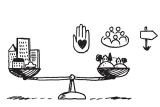
All plans for recovery from the present crisis must ensure that the economy and society are treated equally and addressed simultaneously. Analysing the Stability Programme Update (SPU) recently published by Government and reflecting on the commentary on its implications, it is clear that Ireland is in danger of repeating the mistakes of the past. One of the major lessons to be learned from the crisis of 2008/9 and the subsequent recovery is that giving priority to the economy over all else simply leads to some parts of society doing very well while great swathes are left further and further behind.
The decision to put a new social contract and a focus on the wellbeing of Irish people at the heart of the Fianna Fáil/Fine Gael Framework for a New Programme for Government is very welcome. So too is the assertion that there is no going back to the old way of doing things. The fact that the framework recognises the need for new, credible, quality-of-life measures of individual and societal wellbeing and progress, suggest that the next Programme for Government will go beyond economic priorities and targets and take a more holistic approach in its decision-making. Such a development would be very welcome.
Our initial 15-page response to the Fianna Fáil/Fine Gael Framework for a New Programme for Government welcomes some aspects of the plans, raises concerns about others, and proposes a series of specific policy initiatives that would go some distance towards achieving each of the ten mission statements set out in the Framework.
Despite the inevitable economic aftermath of the current pandemic, the Government of the 33rd Dáil can make significant inroads into the challenges Ireland faces over the next five years. The next Programme for Government must deliver on five key areas: a vibrant economy, decent services and infrastructure, just taxation, good governance and sustainability.
As we face into the most difficult and challenging times most of us have ever known, it is important to acknowledge that despite well documented problems and challenges, Ireland is in the privileged position of having public services and social infrastructure to rely on at a time of crisis. In the coming months, when we begin to think of the future beyond the current crisis, we need to consider how we can deliver a social contract to meet our needs in changing times?