In this socio-economic review for 2021 Social Justice Ireland presents a detailed analysis of a range of key matters which are central to social justice; a vision of Ireland’s…
The recent debacle surrounding the Covid-19 vaccine has highlighted the capacity of corporate transactions to undermine Governments and put critical services such as public health at risk. When things go wrong, as they invariably will when dealing with new drug processes, a new virus variant and a new political system, both nationally and internationally, the disparities in the public / private relationships are laid bare, where corporate profit is prioritised over public health. But health is not the only area at risk.
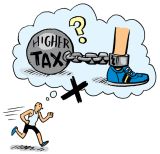
The Department of Finance recently published an update to Ireland’s Corporation Tax Roadmap. The update reaffirms Ireland’s commitment to a multilateral approach via the OECD/G20 Inclusive Framework to address the tax challenges posed by the digitalisation of the economy. It also contains a welcome recognition that a multilateral approach will require compromises and trade-offs. A minimum effective corporate tax rate must be a policy instrument for consideration in light of the ever-changing global context and our commitment to the OECD/G20 Inclusive Framework.
At the European level, what the pandemic has cast doubt on is the very fundamentals of European integration. The main features of the European Union, what could be described as its “pillars”, are these: the single market and freedom of movement, the euro and the Stability and Growth Pact, and competition and state-aid law. We can already look ahead and see that the post-crisis EU could be standing on very different foundations if the questioning of the three basic pillars continues over time or, conversely, it could just as easily go back to its old ways. What will the world environment in which this happens be, though? Here there are four possible scenarios emerging.
If Ireland is to succeed in addressing the challenges we are faced with, the pathway to doing so must be founded on consensus, must be well-managed, and must be properly evaluated. A deliberative decision-making process, involving all stakeholders and founded on reasoned, evidence-based debate is required.
'Building a New Social Contract – Policy Recommendations’ contains more than eighty specific policy recommendations that would go a considerable direction towards a new social contract to improve the quality of life and wellbeing of everyone and ensure that a no-one is left behind as our economy and society recovers from the impact of Covid-19.
On Wednesday, 18th November 2020, Social Justice Ireland held our Annual Social Policy Conference by webinar. This year's theme was 'A New Social Contract, A New Social Dialogue: Building a Better Future'. In case you missed it (or you'd like to revisit the presentations), the videos, papers and graphic reports are all available now.
Covid-19 has caused us to think about many things that previously we may never really have considered: the importance of good public services; the need for a social security system that provides real security in the face of sickness and unemployment; and about concepts such as inter-dependence and solidarity. It has led us to reassess what we mean by ‘essentially work’; who really are the ‘essential workers’; and is it right that many of them are treated the way they are. And it has fundamentally changed the relationship between business and the state.
As societies and economies across the globe respond to the Covid pandemic, Ireland has the opportunity to execute a strategy which can address the major structural challenges from both the present and pastand set out a strategy and a blueprint for a better Ireland.
Covid-19 has highlighted things that are profoundly amiss with our Social Contract. Once the pandemic has been addressed successfully it is crucial that we face up to the radical reforms that are required if we are to deliver a new social contract based on the principles of justice and fairness, with sustainability at its core.