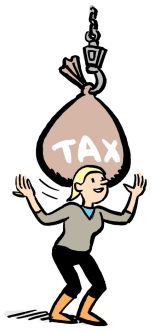
Budget 2021 follows a series of budgets over recent years that have frequently given emphasis to providing reductions in income taxation. Here we compare the total annual value of these reductions between 2014 and 2020.
The current State Pension system deprives many people who have spent their lives in caring roles of financial security in their old age. These are people society should be rewarding, not penalising. With the new Programme for Government committing to the proposed Auto Enrolment Plan, an opportunity to increase the fairness of the Irish pension system is being missed, and at a substantial financial cost.
The most competitive economies of Europe all collect substantially more tax than Ireland does. The evidence suggests that a low tax, low service strategy for attracting investment is short-sighted and that quality education, infrastructure and services are far more important.
Budget 2021 should include a tax on windfall gains from the re-zoning of agricultural land. This money should be made available to local authorities and used to address the ongoing housing problems they face.
A full analysis of the draft Programme for Government will be published in due course. In the meantime, our initial response highlights 10 positives contained within the PfG and 10 causes for concern. We go on to list other areas contained in the document on which Social Justice Ireland had advocated and campaigned.
Ireland generally does a poor job of taxing land and property. Our inefficient Local Property Tax is a perfect example of this. A Site Value Tax would be a fairer and more efficient way to generate revenue, and it would also incentivise better use of land.
‘A Rising Tide Failing to Lift All Boats’ is the latest publication in Social Justice Ireland’s European Research Series. This report analyses performance in areas such as poverty and inequality, employment, access to key public services and taxation. The report also points to key policy proposals and alternatives for discussion. These include the right to sufficient income, meaningful work and access to essential quality services. The policy proposals explore how these areas might be delivered upon in a changing world.
Despite the enormous cost to the exchequer of tax reliefs/expenditures (in 2016 tax reliefs amounted to approximately 10 per cent of total tax revenue) they are not subject to annual assessment as part of the budgetary process. It is extraordinary that this is the case, and Social Justice Ireland believes that reform should be a key part of the next Programme for Government, and of Budget 2021.
An open and transparent policy evaluation process, with meaningful engagement from all stakeholders, would ensure that we learn from our successes and from our mistakes. Such a process would ensure that we evaluate both and offer a framework to take our policy successes and replicate them across Government. Social Justice Ireland believes strongly in the importance of developing a rights-based approach to social, economic, and cultural policy. A key policy measure to deliver an open and transparent policy evaluation process is to measure the socio-economic impact of each budget. This should be a statutory responsibility for Government.
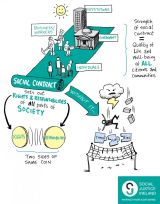
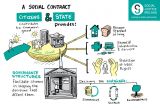
On Friday, 8th May 2020, the Central Statistics Office (CSO) published the results of its survey on the Social Impact of COVID-19. This, as might be expected, makes for concerning reading. The self-reported well-being of the population as a result of the COVID-19 crisis was worse than in 2013, at the height of the impact of the 2008 Financial Crash, with just 12.2 per cent reporting a high life satisfaction rating in April 2020, compared to 31.4 per cent in 2013. The report highlights again the need for a new Social Contract to pave the way for recovery from the impact of COVID-19 and beyond. The impact of job losses on well-being, social inclusion and financial stress are severe and the changes in consumption, particularly the increases in alcohol and tobacco consumption, indicate a potential personal debt and health crisis that must be tackled if society is to function.