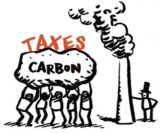
If a government is setting environmental goals, it is important that its taxation system supports these goals. There is great scope in Ireland for shifting the burden of taxation away from productive activity and onto activity which reduces social wellbeing, depletes natural resources and biodiversity, harms the environment, and contributes to climate change. The taxes that people and organisations pay should, to the greatest extent possible, be based on the value they subtract by their use of common resources.
The full cost to Ireland of the COVID-19 pandemic is as yet unknown. Our unemployment rate was 16.5 per cent in March 2020 and the Stability Programme Update (SPU) estimates a possible general government deficit of €23 billion this year; and the Exchequer receipts for March 2020 were almost €1 billion lower than March 2019. Social Justice Ireland recently published our briefing on policy options for Ireland’s Taxation System post-COVID 19. Here we explore one option in particular, an increase in Corporation Tax.
All plans for recovery from the present crisis must ensure that the economy and society are treated equally and addressed simultaneously. Analysing the Stability Programme Update (SPU) recently published by Government and reflecting on the commentary on its implications, it is clear that Ireland is in danger of repeating the mistakes of the past. One of the major lessons to be learned from the crisis of 2008/9 and the subsequent recovery is that giving priority to the economy over all else simply leads to some parts of society doing very well while great swathes are left further and further behind.
It is clear that tax policy will play a vital role both in the immediate Government response to support people and businesses, and in rebuilding our society and economy once the worst of the health impacts are contained. The new Government has an opportunity to reform and broaden our tax base and lay the foundations to increase our total tax take now to ensure we are well prepared to meet any future shocks. We have a once in a generation opportunity to build a new society, a new economy and a new country that reflects the lessons we have learned in recent weeks.
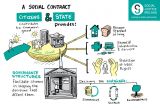
As we navigate through the global crisis caused by COVID-19, it is clear that tax policy will play a vital role both in the immediate Government response to support people and businesses, and in rebuilding our society and economy once the worst of the health impacts are contained. This policy briefing explores some options available to the new Government that would increase our overall tax take as a proportion of national income, broaden our tax base, and deliver a tax policy that would support our social and economic recovery and a new Social Contract
The decision to put a new social contract and a focus on the wellbeing of Irish people at the heart of the Fianna Fáil/Fine Gael Framework for a New Programme for Government is very welcome. So too is the assertion that there is no going back to the old way of doing things. The fact that the framework recognises the need for new, credible, quality-of-life measures of individual and societal wellbeing and progress, suggest that the next Programme for Government will go beyond economic priorities and targets and take a more holistic approach in its decision-making. Such a development would be very welcome.
Our initial 15-page response to the Fianna Fáil/Fine Gael Framework for a New Programme for Government welcomes some aspects of the plans, raises concerns about others, and proposes a series of specific policy initiatives that would go some distance towards achieving each of the ten mission statements set out in the Framework.
Despite the inevitable economic aftermath of the current pandemic, the Government of the 33rd Dáil can make significant inroads into the challenges Ireland faces over the next five years. The next Programme for Government must deliver on five key areas: a vibrant economy, decent services and infrastructure, just taxation, good governance and sustainability.
As we face into the most difficult and challenging times most of us have ever known, it is important to acknowledge that despite well documented problems and challenges, Ireland is in the privileged position of having public services and social infrastructure to rely on at a time of crisis. In the coming months, when we begin to think of the future beyond the current crisis, we need to consider how we can deliver a social contract to meet our needs in changing times?
The European Union faces many challenges in relation to healthcare, cost of housing and financial distress that will be further exacerbated by the Covid-19 pandemic. This is one of the key findings from the National Social Monitor – European Edition. In this Spring 2020 edition of our National Social Monitor, Social Justice Ireland outlines the present situation on a range of policy issues, comparative to the rest of Europe, that impact on people’s wellbeing and looks at what policies can be introduced to support the most vulnerable.