With reports this week of another multi-national aiming to replace call centres with Artificial Intelligence (AI), Ireland needs to invest in human capital to prepare for the impact of digitalisation.
Specific interventions are required to tackle the problem of in-work poverty. Until Government makes tax credits refundable, it will not have an efficient mechanism by which it can address the issue of the working poor.
700,000 on healthcare waiting lists, 500,000 homes without broadband, over 11,000 people homeless – a result of Government policy failing to tackle causes - Social Justice Ireland publishes National Social Monitor Winter 2018.
In order to improve the wellbeing of everyone in society, at all stages of the life cycle, it is vital that our policies address the causes of problems rather than their symptoms only. It is through this lens that Social Justice Ireland examines the ten policy areas in the National Social Monitor.
In this section of our National Social Monitor Autumn 2018 we look at Work, its distribution and in-work poverty and propose a number of policy priorities to tackle the causes of these issues.
With 10,000 people - including 3,600 children - homeless, 72,000 mortgages in arrears, and 86,000 households on social housing waiting lists, it can hardly be denied that Government policy is a dramatic failure.
Social Justice Ireland's quarterly Employment Monitor, published July 2017, may be accessed here. This issue deals with the differences across the different economic sectors in the areas of Employee Numbers, Average Hourly Earnings, and Paid Hours.
Government should stop subsidising the Accommodation and Food Services sector and instead should incentivise the kind of jobs that allow workers to achieve a decent standard of living.
The Living Wage for 2018 has been set at €11.90 per hour; an inrease of 20c over the last year. With the cost of living in most other areas falling, this increase is being driven solely by rising accommodation costs, with rent now accounting for half of minimum living costs in Dublin.
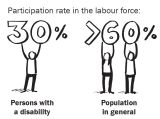
The percentage of people in Ireland living in households where no-one is employed, or where there is only marginal attachment to the labour force, is higher than in most of our European peers. But until now, little research has been carried out on why this is the case and what are the barriers to employment faced by people in these ‘low work intensity’ households.