In this edition of our National Social Monitor, Social Justice Ireland looks at the budgets of each of the 31 Local Authorities and analyses where the money was spent, and where it wasn’t, to assess the priorities of local government.
What does your Local Authority value? What progress is being made at local level to tackle the causes of issues like housing, job sustainability and climate change? Following the publication of Social Justice Ireland's latest National Social Monitor - Local Issues edition, check out our Local Authority profiles, a one-page overview of each Local Authority area and how it spends its budget on your behalf.
Next week, Social Justice Ireland and Trócaire will co-host a hustings event for the Dublin constituency ahead of the European Elections on May 24th. Ahead of this, we have formulated a joint policy platform, with Five Key Policy Asks. They are: The Elimination of Poverty The Championing of Climate Justice Policy Coherence on the SDGs Delivery on the European Pillar of Social Rights Supporting an international treaty on Business and Human Rights
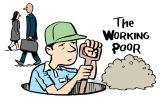
While we welcome the fall in the proportion of employees earning the minimum wage or lower, the fact is that despite very welcome increases in the NMW in the last few years, it remains about 18 per cent below the living wage. It is long past time that government set a five-year timeframe to close the gap between the National Minimum Wage and the living wage, and implement a system of Refundable Tax Credits in Budget 2020 to help mitigate the issue of in-work poverty.
COVID-19 has seen the introduction of unprecedented restrictions on movement, with powers of detention bestowed on medical officers and Gardaí. There are also record numbers of people working from home with remote access to personal data that would otherwise only ever be accessed on work premises. In Episode 11 of our Interview series, Colette Bennett, Research and Policy Analyst chats (remotely) to Doireann Ansbro and Liz Farries of the Irish Council for Civil Liberties on the emergency measures legislation, the data protection implications of the crisis and what this all means from a civil liberties perspective.
The work of Ireland’s carers receives minimal recognition despite the essential role their work plays in society. It is time that Government allocate sufficient resources to supporting the work of carers in Ireland.
Policy and political rhetoric too often pays lip service to goals of gender equality and to the contribution made to society by those in unpaid work, without making any significant moves to improve the lot of those, typically women, who play the economically and socially imperative roles that so often go unremunerated. It is time for this to change.
Work and a job are not always the same thing. Work is far more than just paid employment, and with this in mind it is time to develop policies that ensure all forms of work are supported, valued and recognised.
In the European Edition of our National Social Monitor we look at how Ireland compares with other EU-28 countries when it comes to meaningful work and decent employment.
The headline social inclusion targets addressed in the Irish National Reform Programme are focussed on employment, education and ‘poverty and social exclusion’. How is Ireland performing on the social inclusion aspects of our National Reform Programme and our Europe 2020 targets?